Showing posts with label Egypt. Show all posts

Aug 15, 2016

On Racism and Love


I have been thinking a lot about racism lately. Not just after my move to Germany. It has been on my mind long before. When I lived briefly in the UK in 2009, I got introduced firsthand to anti-muslim racism, back then we talked sometimes about islamophobia in Egypt but I hardly got to think critically about it. I thought yeah maybe it's natural to fear Muslims. That was probably triggered by my anger at the failure of religious institutions and discourses in Egypt. 

Having to live with a British person who always demanded me to explain Islam and my positions around it. He was always talking about halal food and making jokes of women with headscarves. When I saw the hysterical reaction of some people to a friend of mine who was also wearing one. This all made me think that this fear is nothing but rational. I didn't even know if it should be called fear anymore. It was more of prejudice and hate. I got to reflect further on the possible consequences of those prejudices as Marwa ElSherbiny got murdered in Dresden, Germany around the same time. The shocking murder shook hearts and minds, and at that point I got to connect what happened to her with daily practices and attitudes. Observing British media was a painful realization that those dehumanizing images of Muslims are virulently common. 

I got to know about racism much more during my work with refugees in Cairo. Working with refugees who survived gender based violence, I listened to horror stories of how Egyptians dealt with the refugee population and in particular things that can happen to a black woman in Egypt. From the exploitation of domestic workers, to rape incidents, to persistent domestic abuse. This experience helps me reflect on the role switching  I have from a privileged Egyptian to a racial minority in Europe. About how I owned that privilege and what did I have to do with it. It was also at that time that I was forced to think of masculinity in a different way. I had to confront my male privilege and what it means to carry those benefits and privileges. All the forms of systemic, structural and everyday struggles that I was spared from just by being born with this kind of body. I have to negotiate where I stand and what the meaning of being an ally is. I  owe it to all the women that I met in Egypt and elsewhere who taught me and continue to do so.

During all of those phases in my life, I didn't have to really deal with racism as a daily experience, as I never lived long-term in a country where I would be a racial minority. This changed with my move to Germany. Many difficult experiences and encounters pushed me to think and learn about racism. Especially living in a country with a past that still shapes and limits the possible reflection and conversations about racism in today's society. To figure out how I was feeling and how others deal with those situations. I'd say that reading writers of color and having deep honest conversations with people of color helped me reach a much better place at this point. 

However, I still continue to talk about racism often. Some people seem to notice it from the facebook posts or just the daily conversation. This brings me to the point of why I am writing this post. In a situation where discussions about racism bring a lot of discomfort. In times, where 'race' is increasingly replaced with 'culture' to perpetuate racial inequalities. In an environment that shames and silences those conversations and accuses the one who speak it of being obsessed, dissatisfied or ungrateful. Because of all of that I wanted to talk about why I talk about racism.

At first, this should be self explanatory. I have to talk about racism because it affects my personal safety and life. Additionally, if we strive for a better world, or in less idealistic terms, if we just want to live with more responsible manners, we cannot separate racism from other forms of discrimination, be it sexism, classism, ableism, homophobia, transphobia and the rest. There should be no reason to shy away from this racism conversations.

Talking about it helps me (and I guess that's also the case for many others) to explain our perspective and narrative. That process is difficult and exhausting especially when done with people who don't have to deal with racism as part of their daily life. We have to dissociate our feelings and speak carefully and objectively about something that bothers us. This means it requires strength and patience to have those conversations. But most importantly they require mutual trust and openness. We shouldn't be pushed into explaining what racism looks like or feels like unless we need and want to. 

But I don't want to limit this to the frame of fighting and struggle. In another light, talking about racism is really about connecting with others. It's a process of building understanding. It can be a way of building friendships. 

It can also be seen as an act of self care. It helps us find out who we can trust, who can give us emotional support when we talk about it. Who would protect us when things get bad. 
It can be even an act of flirting, if we want to find out if the person is dating material. *wink*. 

I think it can be an act of love, if we understand love as a process of shared understanding and building communication channels. If we believe that love is about being able to center others, listen to their narratives and learning how to give support. 
Or to quote James Baldwin, “The role of the artist is exactly the same as the role of the lover. If I love you, I have to make you conscious of the things you don’t see.”

Apr 13, 2015

On migration and silence


I had written one of those mystic Facebook statuses of mine. Migration as a silencing experience, it goes, with only one or two likes. It was a surprise anybody liked it at all. It was that kind of Facebook status you put out there because it has been harassing your brain cells for a while, hoping that it will touch someone, annoy someone, or reach out to someone. Isn't that how it usually goes after all?

I have been thinking about migration, because yes, rumor has it that I became a migrant. Rumor is true in this case.

I should probably take this chance to say sorry for my lack of proper goodbye behavior. It has been occupying my mind since I left Egypt, and maybe before I left too. I wasn't sure what was going to come next when I leave. I am still not sure what's going to come next.

Amidst the instability and the lack of familiarity that engulf most migrants, I am lately pondering where I stand from the current state of affairs, whether at home, Egypt that is. It is my home. Or the current state of affairs in Germany, my unlikely and unexpected new home.

I guess it matters to have a say on current affairs, not just because I'm an opinionated person, but it's important for me to be engaged in my surrounding community, in a way or another. This desire for social engagement is not a mere result of high moral standing, but also of a deep curiosity. Thank you curiosity.

I do grapple with questions of belonging. Questions of meaning. That's a natural part of migration I guess. I also grapple with voice. My own voice. How should I use? What should I do with it?

As many people know, I talked about Egypt all the time. Like most of the time. Now, I feel I cannot really talk about Egypt. Not because I think I shouldn't, but others seem to think that I shouldn't. The fact that I don't live in Egypt seems to impact people's view of me. That's understandable. I don't have to go through most of the trials and tribulations Egyptians have to endure on a daily basis. Having acknowledged that, should I just cease to care or worry about my home's state of affairs? But maybe these people are right. Maybe I should remain silent on Egypt. Or maybe not.

Then there's a similar yet different dynamic on Germany. Language barrier is a factor. After all, we always ridiculed those pundits who don't speak a word of Arabic yet always had the nerve to educate us on our countries.  Then there are those experiences of marginalization and racism that are just hard to spit out. And even when you want to speak about them, there's a fear that sharing the personal will just turn into an exercise of quantifying and measuring suffering or mere belittling.

I mean in general, it's not exactly easy being a killjoy*. A killjoy as you may be aware, is the person who tries to be conscious of power structures or how privilege works, and tries to talk about these things, in an effort to achieve a more just way of living, and as a result kills the joy of those who go on living their lives willfully or inadvertently overlooking issues of privilege and injustice. The killjoy is not free of privilege or occasionally of discriminatory behavior, for that matter. She or he tries to be aware of those privileges and not to act them out. At least that's the plan.

Why did I digress into that? I am off the topic now. Or is that the actual topic?

My question is what do we do with our voices? How do we share our opinions and experiences as migrants? As in-betweeners. As people struggling with identity and shifting surroundings. How do we find our voices in these situations? Why does it get taken away from us? 

Why are we being shamed? Being shamed for leaving home. This leaves me feeling as if I should completely uproot myself. And being shamed for coming to the new home, which makes me feel I should have never left and will never be part of this new home

Whether we choose to leave or not, life is full of complicated choices. Migration, whether forced or voluntary or in-between, should never another reason for making people's lives harder than already is.


*inspired by Sara Ahmed's writing


Mar 6, 2013

Syrian Refugees Expose Egyptian Racism!


A refugee is a person who fled their country for fear of prosecution, conflict, disaster, etc. Many leave their countries due to political, religious, ethnic, or gender-based persecution. Depending on the country of arrival, refugees facing various obstacles; those could be legal barriers, or economic issues as it's difficult to find a job in the new country, or could be related to sociocultural factors such as difference in language, cultural habits, etc.


Once called a revolution, now the most commonly used word for what's happening in Syria now is civil war. Syrians have been fleeing the violence to neighboring countries. And while some countries set up refugee camps such as Jordan and Turkey, Syrian refugees in Egypt are more loosely located in urban or even rural areas.


In addition to the newly-coming Syrian refugees, Egypt is host to a large number of Sudanese, Ethiopian, Somali, Eritrean refugees plus Palestinians and Iraqis.


The response to Syrian refugee presence has shown as much Egyptian chivalry towards Syrians as well as deeply held racism against migrants from African origins.  There are many examples that support my argument:


FIRST:  Civil society response has been essentially different. Numerous civil society groups have stepped in to assist Syrians whether with medical, food, shelter services.  These range from nation-wide entities such as the doctors' syndicate to small locality-based groups and mosques. In contrast, refugee of African origins are assisted by a limited number of aid groups, mostly targeting refugees only. While most those groups assist Syrians as well, African refugees find it extremely difficult to access services outside those aid groups.


SECOND: While this closed aid system of African refugees limits their integration to Egyptian society, Syrians find it relatively easy to access various service providers alongside other Egyptians, facilitating their integration into the community. This is also manifested by the heavy presence of African refugees in Cairo (where they can access services), while Syrians are more spread in different governorates and regions of Egypt, because they know they may be able to get decent support.


THIRD:  African refugees report racist slurs and comments on Egyptian street every day. This comes in addition to persistent police harassment and abuse. While one cannot claim that life has been easy for Syrians here, their situation is significantly different.  I recall the brutal massacre of Sudanese refugees in Mostafa Mahmoud square in 2005 when security forces violently interfered to dismantle their protests in front of UN Refugees Agency Office resulting in killing dozens of protesters including women, children, and elderly people. 


FOURTH:     What African migrants go through on a daily basis is not limited to them. It also a ordinary occurrence with Egyptian Nubians. Their dark skin is easily seen as a basis to immediately perceive them as non-Egyptians, as many report that people usually assume they're Sudanese or African-Americans! While race is hardly an obvious factor in Egyptian politics, it's not unnatural to ascribe Nubian marginalization to their ethnic background. Even when some Nubians call for their 'right to return' as a necessary compensation to their forced displacement from Old Nubia, they're seen as instigators or separationists. 


FIFTH:  Women refugees from African origins, typically, find it more difficult as the sexual harassment becomes combined with racism. Since a big part of African refugee women work as domestic workers, they face the long litany of exploitation domestic workers usually face whether sexual or otherwise.


 We all know that sexual violence is not limited to any certain gender, race, etc. There have been increasing reports of exploitation of Syrian women to be married off without their consent in order to get her family supported by the husband. What happens to either Syrian or African women is a gross abuse and violation, however it highlights the different ways Egyptian male perpetrators view those women. Some can only amount to inferior domestic workers while the Syrians can be marriage material!


Comparisons are unfair and suffering is never to be quantified or measured. However, this is not the intention of this piece; it's about exposing Egyptian racist attitudes to Africans, which sounds like an oxymoron since Egyptians are African themselves.


Also, the issue definitely runs deeper than this. The historic relationship with Syria makes us see Syrians in a special light. This is at odds with the African relationships which once were strong but kept on declining particularly after Mubarak's assassination attempt in Addis Ababa. Everyday government and independent media cover events in Syria while we hardly get news of what's happening in Ethiopia or what's going on in South Sudan.


In any case, our society continues to be in deep denial about this problem, hindering any action to be taken in that regard. We have seen progress on some issues such as  they have moved from denial phase into how-to-deal-with-it phase, such as street sexual harassment. Whether we will see the same happening with racism and ethnic discrimination is yet to be seen.


Oct 17, 2012

Stop harassment: It's not sex, it's oppression!


It was Eid celebrations once again, Eid has become notorious for waves  of sexual harassment whether downtown Cairo or elsewhere, or even in other governorates which we hardly know anything about.

Things were different this time. Various initiatives and announced they are stepping up their response and trying to deal with sexual harassment. There were attempts to document and stop sexual harassment on the street and the metro. Moreover, media has covered sexual harassment duing Eid more extensively. Cameras were out on the street to capture photos of guys stepping their boundaries. More positively, the debate and writing on the ugly phenomenon seemed to have surpassed times past.

Did all those analyses capture the reality of sexual harassment? I don't think so.

"My dignity is my freedom"
Many of those who approach the subject restrict the etiology in one of two options: first, women's clothing and their lack of decent cover-up (these arguments sometimes extends to attributing it to the mere presence of women on the street). Secondly, sexual repression and frustration which our male youth suffer from.

In fact, I don't think these two interpretations differ much from each other; they're like two sides of one coin. Proponents of this theory hold that women are sexual objects, more like a magnet or a moving vessel. Since youth do not have the means to get married at an early age, they're sexually frustrated and beholding these sexual vessels (women) moving around on the street would provoke men and hence they have to take as much as possible out o that vessel to fulfill their needs.

Why does sexual harassment occur and why has it become to spread? Indeed our youth are repressed, but what type of repression? Most o us obtain education at an educational system that produces disfigured humans, unprepared to face life's challenges, and becomes met with unmerciful labor market. It's possible to give a lot of statistics about unemployment rate, but numbers won't capture the experience of seekers of decent jobs.

More importantly, are young people listened to? are young people invested in? how able are young people to participate in social and political life?  The rate was 3% before the revolution and I am sure it has risen but still far from satisfying. What do we expect after this recipe of marginalization and systemic failure? Frustration, violence and religious extremism.

The problem is sexual frustration or women's clothes. The truth is men in our society feel "emasculated". Men in our country feel oppressed. The oppressor oppressed whoever weaker than them. And we've had our share of it; centuries of colonization and decades of military dictatorship. Men take it out on women (ie the weaker).

Last year, I was part of a research team on youth attitudes towards sexual harassment. What struck me was the depth of misconceptions regarding sexual harassment. Although a lot of them denounce it, many thought girls are the ones responsible for it and even enjoy it. Dangerously enough, they show no understanding of women's experience of violence whether on short or long term.

Most of us don’t appreciate the sense of weakness, fear, and powerlessness that harassment creates whether it was verbal or physical. Most of us don’t appreciate that a certain gaze to a woman’s body could make her feel as senseless object. So what would it feel like if their hands reach out to her most private parts of the body with an intent to humiliate and showoff of power, and not for pleasure? If you wish to know more about such experience, you better listen to the women themselves.

"Control yourself, not my clothes"
Is there a solution? Of course. Our hope is that our people breaks free from its shackles and restore its dignity. Education must be reformed both in terms of curricula and methodology. Curricula must include human rights education, gender equality, and sexuality education. Youth must be truly included in all decision-making related to their lives; not just using them as window-dressing as governments like to do.

Many talk of increasing legal penalties. To be honest I am quite skeptical of such suggestions. We have a lot of laws that are just ink on paper without enforcement. Many talk of increasing police presence on the streets. This may sound reasonable, but what about policemen who actually harass women? What would encourage women to go report the incidents, especially with the huge trust gap between people and police?

Legislation is significant, but more importantly, society has to be engaged. The existence of laws expresses the state’s commitment towards a certain issue. Now we live in the time of the people, community initiatives are key to create change; and many of those have recently surfaced.
Other suggestions such as facilitating marriage or changing women clothing are quite preposterous.

Two more points I would like to highlight:

1- Sexual harassment is not the only form of violence women are subjected to in our society. There is also domestic violence, female genital cutting, early and forced marriages, financial violence, etc.  the root of those problems are not much different that harassment. These issues are not any less important that street harassment. We must not limit women issues to what she faces in the public space only because there are much more violations.

2- It’s only women who suffer from street harassment, it has become mainstreamed. Anyone who looks different or vulnerable is liable to harassment. Foreigners, black people, people who dress in a nonconforming way, people with disability, and the list goes on.

The first step in facing the problem is acknowledging it and dealing with it in a mature way. Safety and physical and mental integrity are rights to everyone without discrimination.

Sep 22, 2012

Time has come for Egypt's youth


Although Egypt’s revolution was heavily catalyzed by youth, little has changed for them. In Egypt, we have a very youth population. This means that young people make up the biggest share in the country’s population; 40% of Egyptians are between ages 10 and 29. While many like to portray that as a burden for the country, it is actually a huge untapped resource. Investing in those young people can mean huge implications for the country’s overall development.


A young #Jan25 protester. Photo by Jonathan Rashad
The sad truth is that young people in Egypt, despite their critical mass, are excluded and marginalized. Young people obtain their education in an inefficient system based on rote learning in overcrowded classrooms. Also, females and poorer people have less levels of education because of socioeconomic conditions and/or cultural norms. The educations systems fails to adequately prepare them to labor market. Egyptian youth suffer from high rates of unemployment. Only 62% of male youth are in jobs while for females, it’s only 14%, showing a big gender gap in employment. 

These numbers do not capture the realities of what youth face in today’s Egypt. The picture is further complicated by very low youth participation in political and social affairs. In 2010, the rate of youth participation was only 3%. This has definitely changed after the revolution where more young people feel ownership of their own country. However, serious steps need to be taken to truly represent youth apart from the usual “window dressing” approach. 


Youth issues should not be solely dealt with by the Ministry of Youth and Sports. Youth issues require specific policies within all government departments. Moreover, our government usually dealt with youth as if they’re a security concern, instead of actually listening to their demands and working towards achieving them.

It’s time to include youth at all levels, in all issues related to them and to the society as a whole. It’s time make the saying “Nothing for us, without us” a reality. Youth should be free to organize themselves and be encouraged to volunteer and engage their local communities. This can be achieved by espousing values of volunteerism and community service from an early age.

Youth lives and experiences have greatly changed from their parents’. They live in a globalized world where access to information is much easier than before. Marriage age has obviously risen during the last couple of decades. However, youth are expected to remain virgins until they get married. This creates a huge gap between society expectations and actual sexual behavior.


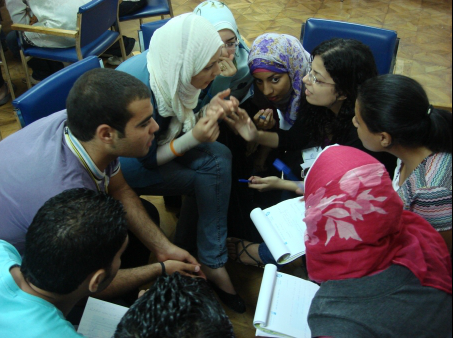
Photo from a youth workshop organized by Y PEER Network

Meanwhile, adolescents and youth in Egypt remain in the dark when it comes to information about their bodies, about sex, or relationships. School curricula lack basic information and civil society efforts are restricted by the government and don’t reach the necessary numbers of youth.

An issue such as comprehensive sexuality education gets a lot of pushback in Egypt. Society usually protests informing young people about sexual health on the basis that it encourages youth to start having sex. Not only this claim is unfounded, but also it means that if youth actually start having sex they won’t know how to protect themselves against unwanted pregnancies and sexually transmitted infections.


Because of lack of public debate around comprehensive sexuality education, it is usually perceived to be about how to have sex. Conversely, it’s about providing youth with information about their bodies, puberty, reproduction, contraception, rights and diversity. Moreover, it’s about promoting positive values and attitudes towards gender and human rights. It’s about empowering young people to assume responsibility for their health and lives. 

This is particularly relevant to our context since we have a marked gender gap in access to education, employment and health services. Moreover, women suffer from different forms of gender based violence such as sexual harassment, rape, domestic violence, economic violence, in addition to harmful traditional practices such as female genital mutilation. Sex education can be a great tool to change deeply seated patriarchal values in our society. 

We need to stop talking about if we should do and get the point of talking about how to do it. And there are many ways it could be done.

The new leadership in Egypt is entangled with huge challenges; however youth must be at the heart of their agenda. All those issues are related to each other in a way or another. Youth participation would affect young people’s future and maturation process. Sexuality education would lead to healthier, more responsible generations. Investing in youth is a priority that cannot be delayed or ignored any longer.

Now is the time for youth!


An earlier version of this post was posted here at the occasion of 10 Days of Activism Campaign. More about the campaign here 


Sep 2, 2012

فلنتوقف عن التحرش: إنه القهر وليس الجنس


وهل علينا العيد مرة أخرى وكالعادة لم يأتي بجديد. موجات من التحرش الجنسي انتشرت سواء في وسط البلد بالقاهرة أو خارج وسط البلد أو المحافظات التي قليلا ما نعرف ما يدور بها. الأمر كان مختلف قليلا هذه المرة حيث كان هناك بعض المبادرات التطوعية التي حاولت رصد الظاهرة والتصدي لها، وكانت التغطية الإعلامية أكثر تكثيفا حيث كان من الواضح أن كاميرات الصحافة مستعدة لالتقاط صور من قلب الحدث. والجديد ايضا أن رأينا نقاشات وكتابات تحاول لتحليل ظاهرة التحرش الجنسي أكثر من الماضي.

هل نجحت تلك التحليلات في استيعاب واقع التحرش الجنسي؟ معتقدش.

لازال العديد ممن يحاولوا فهم التحرش يحصروا أسباب الظاهرة في واحد من اثنين: أولهم هو ملابس المرأة ودرجة "احتشامها" و في أقوال أخرى وجود المرأة عموما في الشارع وثانيهم الكبت أو "الهيجان" الجنسي الذي يعاني منه الشباب.

في الحقيقة لا يختلف التفسيران عن بعضهما البعض كثيرا فهم أشبه بوجهان لعملة واحدة. يعتبر أصحاب هذه النظرية أن المرأة هي كيان جنسي مثير أشبه بمغناطيس أو وعاء جنسي متحرك وبما أن الشباب أصبح لا يملك أن يتزوج في سن مبكر فبالتالي يعاني من الكبت الجنسي ومشاهدة هذه الأوعية الجنسية (النساء) تتجول في الشارع سوف يستفزه والتالي لابد أن "يغرف" منها قدر ما استطاع لاشباع احتياجاته ورغباته.


لماذا يحدث التحرش الجنسي ولماذا انتشر بهذا الشكل؟ من المؤكد أن الشباب في بلدنا مكبوت ولكن أي نوع من الكبت؟ يحصل معظمنا على التعليم في منظومة تعليمية يخرج منها مشوه نفسيا وغير معد لمواجهة الحياة وتحدياتها ليقابل سوق عمل لا يرحم. من الممكن إعطاء الكثير من الاحصائيات عن معدل البطالة  ولكن الأرقام لن تعبر عن التجربة التي يمر بها الباحثين عن عمل كريم ودخل معقول بدون جدوى.  وفوق هذا كله من يسمع رأي الشباب أو يستثمر في طاقتهم وابداعاتهم؟ لا أحد. ما هي مدى مشاركة الشباب في أنشطة مجتمعية أو سياسية؟ 3% قبل الثورة. هل تغير هذا المعدل بعد الثورة؟ غالبا ولكن ليس بالقدر الكافي بعد. ماذا نتوقع بعد هذه الخلطة من التهميش والفشل؟ احباط وعنف وتطرف ديني. 

المشكلة ليست الكبت الجنسي ولا ملابس النساء. الحقيقة هي أن الرجال في مجتمعنا لا يشعرون برجولتهم. الحقيقة هي أن الرجال في بلدنا يشعرون بالقهر. المقموع يقمع من هو أضعف منه. واحنا عندنا من القمع كتير.. قرون من الاحتلال وعقود من الديكتاتورية العسكرية. الرجال يخرجون شحنتهم من الاحباط والضعف على من أضعف منهم: النساء غالبا!

العام الماضي كنت جزء من دراسة بحثية عن آراء الشباب في التحرش الجنسي. أكثر ما لفت انتباهي هو عمق المفاهيم المغلوطة لدى الشباب عن التحرش. بالرغم من رفض جزء كبير منهم لظاهرة التحرش ولكن هناك الكثير من يعتقد أن الفتاة هي السبب الأساسي في التحرش بل وغالبا ما يستمتعن به. الأخطر هو عدم تفهم هؤلاء الشباب بتأثير التحرش على النساء سواء على المدى القصير أو الطويل وهذا ينطبق على الكثير من الذكور للأسف.

 لا يقدر معظمنا احساس الضعف والخوف وقلة الحيلة الذي يولده التحرش سواء كان لفظيا أو بدنيا. لا يقدر معظمنا أن نظرة من شاب الى جسد المرأة تشعرها بأنها كيان بدون احساس فما بالك عندما تمتد أيديهم إلى أكثر مناطق الجسم خصوصية بغرض الإهانة وإثبات القوة وليس بغرض الإشباع الجنسي. لا تتعجبوا إذا دعت بعض النساء لاستخدام للعنف ضد المتحرشين فهي النتيجة الطبيعية لما يلاقوه في الشوارع. إذا كنت ترغب في فهم تجربة التحرش ربما الأفضل أن تسمع النساء أنفسهن مثل تدوينة شيرين ثابت بعنوان موقع اباحي أو تدوينة إيزيس خليل عن علاقتها بجسدها.


هل هناك من حل؟ بالطبع. أملنا في تحرر الشعب من قيوده وعودة الحرية والكرامة له (استعنا على الشقا بالله). لابد من اصلاح التعليم من ناحية المناهج أو أسلوب التعليم العقيم. لابد من أن تحتوي المادة الدراسية على مواد تعزز من ثقافة حقوق الانسان واحترام الآخر والمساواة بين الجنسين وأيضا التربية الجنسية. لابد ن مشاركة الشباب الحقيقية في كل ما يخصهم ويخص المجتمع ولا أقصد هنا المشاركة على غرار المجلس القومي للشباب.

يتحدث الكثير عن تشديد العقوبات والقوانين الرادعة، ولا أنكر تشككي من فعالية هذه المقترحات فلدينا العديد من القوانين التي لا تجد من ينفذها. كما يتحدث الكثير عن تشديد وجود قوات الشرطة بالشوارع، قد يكون هذا مقترح معقول ولكن ماذا عن رجال الشرطة الذين يتحرشوا بالنساء. وما الذي سوف يشجع النساء على اللجوء للشرطة للابلاغ مع معرفتنا جميعا بأزمة الثقة بين المواطن والشرطة؟ 

القانون معركة مهمة ولكن أهم منها هي العمل مع المجتمع نفسه. لا شك في أن القانون يعبر بشكل ما عن التزام الدولة نحو قضية ما ولكننا نعيش في وقت الشعب. المبادرات الشعبية (بعيدا عن الدولة) من أهم الطرق التي نخلق بها التغيير في مجتمعنا وبالفعل ظهر العديد منها على الساحة مؤخرا. 

أما الاقتراحات الأخرى على غرار تسهيل زواج الشباب أو تقصير فترة التعليم أو تغيير ملابس النساء فلا أعتقد أنها تحتاج إضاعة الوقت في مناقشتها.

قبل أن أختم التدوينة أحب أن ألقي الضوء على نقطتين:

الأولى: التحرش الجنسي ليس الشكل الوحيد للعنف ضد المرأة في مجتمعنا فهناك العنف المنزلي والختان والحرمان من الميراث والزواج المبكر والقسري وغيرها ولا تختلف أسباب كل هذه المشاكل عن أسباب التحرش التحرش وهذه القضايا لا تقل أهمية عن التحرش الجنسي ولا ينبغي علينا حصر مشاكل المرأة في مشاكلها في المساحات العامة فقط لأنها تتعرض لغيرها من الانتهاكات.

ثانيا: التحرش لا يعاني منه النساء في الشارع فقط. بل أصبحت للأسف ثقافة عامة. كل مستضعف او مختلف يتم التحرش به. الأجانب يتحرش بهم وسود البشرة سواء مصريين أو غير مصريين يلقون نصيبهم المستمر من التعليقات العنصرية. حتى من يرتدي أزياء "غير تقليدية" أو الشخص القصير أكثر من اللازم أو ذوي الإعاقة .. الخ ليس لديهم الحق في التواجد في الشارع بأمان. أول خطوات مواجهة المشكلة هو الاعتراف بها والتعامل الناضج معها. الأمان والسلامة الجسدية والنفسية حق للجميع بدون تمييز.