Oct 24, 2012

Masturbation, aka, self-love!

A couple of nights ago, a screening of a documentary focusing on Masturbation as part of independent cinema event took place. I couldn’t have missed such event where a glimpse of sexuality-related debate was to be held! The documentary was called “Secret As Usual” سرية كالعادة which is wordplay for the term Secret Habitالعادة السرية which is how masturbation is usually referred to in Egypt.

The 30-minute long documentary is all made up of interviews, save for very scarce visual material. The interviewees are a few Egyptian young people of both genders and the rest are experts including andologists, psychiatrists and the like including the famous (for some, notorious) Heba Qotb, who’s been striving to position herself as a media-sexology figure in the last few years.


Through the interviews, we hear the young people talk about the ways they perceive masturbation & their attitudes towards it; not much personal experience. The “experts” mostly lecture us about what’s right and wrong, healthy and unhealthy for the remainder of it.

To be honest, the movie left me quite frustrated despite being a lauded initiative by the director (she made a previous film about sexual harassment). We may assume that the sheer attempt of approaching the matters of sexuality in our context is a happy event. That wasn’t exactly how I felt however.

The movie painstakingly tries to correct misconceptions about masturbation. It tries to open up options that masturbation may not be a bad thing. The Sheikh and the Priest say that there are no clear religious instructions against it. The doctors say that it doesn’t cause the oft-cited myths of blindness, madness, weakness, infertility, etc. Right after masturbation has been declared innocent of causing these afflictions, the “doctors” go on to explain how it actually causes premature ejaculation!

My frustration comes from that the film’s “experts” fail to deliver a viewpoint that masturbation is actually a healthy, useful and safe practice! It tries to correct and destigmatize, but it doesn’t affirm the positive aspect of masturbation. The message was that it’s not bad, but not good either, and that it usually reveals something wrong is going on.

My second disappointment is that the director interviewed the usual suspects: the medical and religious institutions, and dropped the human rights and anthropology approach. 
A positive approach to sexuality in general and masturbation in particular was missing.

Yes, jerking off is good, if don’t know that already. Let’s revisit how:
Photo from Scarlteen.com

For one thing, sex is good and healthy and it’s not that different if you do it with someone else or with yourself. It improves blood circulation, delays ageing and does other good stuff to your body. Masturbation helps people explore their bodies, their pleasure patterns, and sensitive areas. It can be used as an exercise to avoid premature ejaculation and practice self-control. Notably, it’s the safest way of sex out there. Unless, you’re using sex toys or similar objects, there is no risk of contracting sexually transmitted infections. 

Unless masturbation seriously interferes with productivity and daily life activities, it cannot be considered an addiction.

One would assume that society is now okay with masturbation, because let’s face it, everyone is doing it. But no, that’s not the case. Through my work with young people in schools and youth centers, I received countless questions about it. There remain a great deal of people who feel guilty about it, haunted by morbid thoughts of sinfulness and uncleanliness, in addition to all the other health hazard myths.

No wonder! It’s not uncommon for religious scholars to speak against it (it’s safer for them to denounce any form of sexuality), thereby enforcing the sense of guilt. It’s also no surprise when doctors juggle their opinions between “it’s not bad” to “it can cause you isolation and premature ejaculation”.

There is a view that masturbation was mentioned in The Bible through the story of Onan who would withdraw the penis during intercourse and “waste his seed”. Though this view is questionable by some, it is still used by many to justify why masturbation (and even contraception) is sinful. There is no mention of masturbation in Koran, but a couple of questionable interpretations and hadiths (prophet sayings) are perpetuated by most conservative sheikhs  to denounce it. Other Islamic scholars are permissive of it on grounds that it may prevent a greater sin (sex outside marriage).

Unexpectedly, it’s not only the religious institution that has intensified negative views around it. The medical institution played a historic vicious role as well. In fact, the term secret habit sounds very similar to the expression secret vice (and even self pollution) which dates back to the 19th century in Western Europe and America, aka during the rise of modern medicine. For centuries, medical practice viewed masturbation as a serious public health concern that leads to insanity, and various other ailments.

I am well aware that using a sex-positive approach in sexuality discussions is a very difficult battle. We are in a country that’s still struggling to give young people the right to be informed about their bodies, sexuality and health. A recent policy brief by Population Reference Bureau (A Washington-based research center) provides more information and recommendations for incorporating comprehensive sexuality education into schools curricula in Egypt.

Such documentaries are good starting points. Public debates regarding sexuality matters are needed, though there is a current fear of moral panics and pushback by conservative forces in society that feel empowered after the revolution. Discretion about public debate is always nice, but too much caution may also get us no where.

The battle is going to be long and tough. It won’t get very far unless we move beyond the stereotypical ways of portraying sex and unless the progressive, sex-positive voices are included in the conversation.

Oct 17, 2012

Stop harassment: It's not sex, it's oppression!


It was Eid celebrations once again, Eid has become notorious for waves  of sexual harassment whether downtown Cairo or elsewhere, or even in other governorates which we hardly know anything about.

Things were different this time. Various initiatives and announced they are stepping up their response and trying to deal with sexual harassment. There were attempts to document and stop sexual harassment on the street and the metro. Moreover, media has covered sexual harassment duing Eid more extensively. Cameras were out on the street to capture photos of guys stepping their boundaries. More positively, the debate and writing on the ugly phenomenon seemed to have surpassed times past.

Did all those analyses capture the reality of sexual harassment? I don't think so.

"My dignity is my freedom"
Many of those who approach the subject restrict the etiology in one of two options: first, women's clothing and their lack of decent cover-up (these arguments sometimes extends to attributing it to the mere presence of women on the street). Secondly, sexual repression and frustration which our male youth suffer from.

In fact, I don't think these two interpretations differ much from each other; they're like two sides of one coin. Proponents of this theory hold that women are sexual objects, more like a magnet or a moving vessel. Since youth do not have the means to get married at an early age, they're sexually frustrated and beholding these sexual vessels (women) moving around on the street would provoke men and hence they have to take as much as possible out o that vessel to fulfill their needs.

Why does sexual harassment occur and why has it become to spread? Indeed our youth are repressed, but what type of repression? Most o us obtain education at an educational system that produces disfigured humans, unprepared to face life's challenges, and becomes met with unmerciful labor market. It's possible to give a lot of statistics about unemployment rate, but numbers won't capture the experience of seekers of decent jobs.

More importantly, are young people listened to? are young people invested in? how able are young people to participate in social and political life?  The rate was 3% before the revolution and I am sure it has risen but still far from satisfying. What do we expect after this recipe of marginalization and systemic failure? Frustration, violence and religious extremism.

The problem is sexual frustration or women's clothes. The truth is men in our society feel "emasculated". Men in our country feel oppressed. The oppressor oppressed whoever weaker than them. And we've had our share of it; centuries of colonization and decades of military dictatorship. Men take it out on women (ie the weaker).

Last year, I was part of a research team on youth attitudes towards sexual harassment. What struck me was the depth of misconceptions regarding sexual harassment. Although a lot of them denounce it, many thought girls are the ones responsible for it and even enjoy it. Dangerously enough, they show no understanding of women's experience of violence whether on short or long term.

Most of us don’t appreciate the sense of weakness, fear, and powerlessness that harassment creates whether it was verbal or physical. Most of us don’t appreciate that a certain gaze to a woman’s body could make her feel as senseless object. So what would it feel like if their hands reach out to her most private parts of the body with an intent to humiliate and showoff of power, and not for pleasure? If you wish to know more about such experience, you better listen to the women themselves.

"Control yourself, not my clothes"
Is there a solution? Of course. Our hope is that our people breaks free from its shackles and restore its dignity. Education must be reformed both in terms of curricula and methodology. Curricula must include human rights education, gender equality, and sexuality education. Youth must be truly included in all decision-making related to their lives; not just using them as window-dressing as governments like to do.

Many talk of increasing legal penalties. To be honest I am quite skeptical of such suggestions. We have a lot of laws that are just ink on paper without enforcement. Many talk of increasing police presence on the streets. This may sound reasonable, but what about policemen who actually harass women? What would encourage women to go report the incidents, especially with the huge trust gap between people and police?

Legislation is significant, but more importantly, society has to be engaged. The existence of laws expresses the state’s commitment towards a certain issue. Now we live in the time of the people, community initiatives are key to create change; and many of those have recently surfaced.
Other suggestions such as facilitating marriage or changing women clothing are quite preposterous.

Two more points I would like to highlight:

1- Sexual harassment is not the only form of violence women are subjected to in our society. There is also domestic violence, female genital cutting, early and forced marriages, financial violence, etc.  the root of those problems are not much different that harassment. These issues are not any less important that street harassment. We must not limit women issues to what she faces in the public space only because there are much more violations.

2- It’s only women who suffer from street harassment, it has become mainstreamed. Anyone who looks different or vulnerable is liable to harassment. Foreigners, black people, people who dress in a nonconforming way, people with disability, and the list goes on.

The first step in facing the problem is acknowledging it and dealing with it in a mature way. Safety and physical and mental integrity are rights to everyone without discrimination.

Sep 22, 2012

Time has come for Egypt's youth


Although Egypt’s revolution was heavily catalyzed by youth, little has changed for them. In Egypt, we have a very youth population. This means that young people make up the biggest share in the country’s population; 40% of Egyptians are between ages 10 and 29. While many like to portray that as a burden for the country, it is actually a huge untapped resource. Investing in those young people can mean huge implications for the country’s overall development.


A young #Jan25 protester. Photo by Jonathan Rashad
The sad truth is that young people in Egypt, despite their critical mass, are excluded and marginalized. Young people obtain their education in an inefficient system based on rote learning in overcrowded classrooms. Also, females and poorer people have less levels of education because of socioeconomic conditions and/or cultural norms. The educations systems fails to adequately prepare them to labor market. Egyptian youth suffer from high rates of unemployment. Only 62% of male youth are in jobs while for females, it’s only 14%, showing a big gender gap in employment. 

These numbers do not capture the realities of what youth face in today’s Egypt. The picture is further complicated by very low youth participation in political and social affairs. In 2010, the rate of youth participation was only 3%. This has definitely changed after the revolution where more young people feel ownership of their own country. However, serious steps need to be taken to truly represent youth apart from the usual “window dressing” approach. 


Youth issues should not be solely dealt with by the Ministry of Youth and Sports. Youth issues require specific policies within all government departments. Moreover, our government usually dealt with youth as if they’re a security concern, instead of actually listening to their demands and working towards achieving them.

It’s time to include youth at all levels, in all issues related to them and to the society as a whole. It’s time make the saying “Nothing for us, without us” a reality. Youth should be free to organize themselves and be encouraged to volunteer and engage their local communities. This can be achieved by espousing values of volunteerism and community service from an early age.

Youth lives and experiences have greatly changed from their parents’. They live in a globalized world where access to information is much easier than before. Marriage age has obviously risen during the last couple of decades. However, youth are expected to remain virgins until they get married. This creates a huge gap between society expectations and actual sexual behavior.


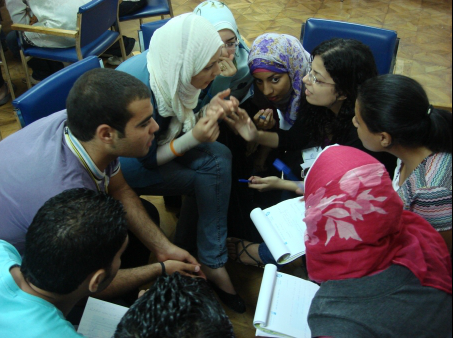
Photo from a youth workshop organized by Y PEER Network

Meanwhile, adolescents and youth in Egypt remain in the dark when it comes to information about their bodies, about sex, or relationships. School curricula lack basic information and civil society efforts are restricted by the government and don’t reach the necessary numbers of youth.

An issue such as comprehensive sexuality education gets a lot of pushback in Egypt. Society usually protests informing young people about sexual health on the basis that it encourages youth to start having sex. Not only this claim is unfounded, but also it means that if youth actually start having sex they won’t know how to protect themselves against unwanted pregnancies and sexually transmitted infections.


Because of lack of public debate around comprehensive sexuality education, it is usually perceived to be about how to have sex. Conversely, it’s about providing youth with information about their bodies, puberty, reproduction, contraception, rights and diversity. Moreover, it’s about promoting positive values and attitudes towards gender and human rights. It’s about empowering young people to assume responsibility for their health and lives. 

This is particularly relevant to our context since we have a marked gender gap in access to education, employment and health services. Moreover, women suffer from different forms of gender based violence such as sexual harassment, rape, domestic violence, economic violence, in addition to harmful traditional practices such as female genital mutilation. Sex education can be a great tool to change deeply seated patriarchal values in our society. 

We need to stop talking about if we should do and get the point of talking about how to do it. And there are many ways it could be done.

The new leadership in Egypt is entangled with huge challenges; however youth must be at the heart of their agenda. All those issues are related to each other in a way or another. Youth participation would affect young people’s future and maturation process. Sexuality education would lead to healthier, more responsible generations. Investing in youth is a priority that cannot be delayed or ignored any longer.

Now is the time for youth!


An earlier version of this post was posted here at the occasion of 10 Days of Activism Campaign. More about the campaign here.  


Sep 2, 2012

فلنتوقف عن التحرش: إنه القهر وليس الجنس


وهل علينا العيد مرة أخرى وكالعادة لم يأتي بجديد. موجات من التحرش الجنسي انتشرت سواء في وسط البلد بالقاهرة أو خارج وسط البلد أو المحافظات التي قليلا ما نعرف ما يدور بها. الأمر كان مختلف قليلا هذه المرة حيث كان هناك بعض المبادرات التطوعية التي حاولت رصد الظاهرة والتصدي لها، وكانت التغطية الإعلامية أكثر تكثيفا حيث كان من الواضح أن كاميرات الصحافة مستعدة لالتقاط صور من قلب الحدث. والجديد ايضا أن رأينا نقاشات وكتابات تحاول لتحليل ظاهرة التحرش الجنسي أكثر من الماضي.

هل نجحت تلك التحليلات في استيعاب واقع التحرش الجنسي؟ معتقدش.

لازال العديد ممن يحاولوا فهم التحرش يحصروا أسباب الظاهرة في واحد من اثنين: أولهم هو ملابس المرأة ودرجة "احتشامها" و في أقوال أخرى وجود المرأة عموما في الشارع وثانيهم الكبت أو "الهيجان" الجنسي الذي يعاني منه الشباب.

في الحقيقة لا يختلف التفسيران عن بعضهما البعض كثيرا فهم أشبه بوجهان لعملة واحدة. يعتبر أصحاب هذه النظرية أن المرأة هي كيان جنسي مثير أشبه بمغناطيس أو وعاء جنسي متحرك وبما أن الشباب أصبح لا يملك أن يتزوج في سن مبكر فبالتالي يعاني من الكبت الجنسي ومشاهدة هذه الأوعية الجنسية (النساء) تتجول في الشارع سوف يستفزه والتالي لابد أن "يغرف" منها قدر ما استطاع لاشباع احتياجاته ورغباته.


لماذا يحدث التحرش الجنسي ولماذا انتشر بهذا الشكل؟ من المؤكد أن الشباب في بلدنا مكبوت ولكن أي نوع من الكبت؟ يحصل معظمنا على التعليم في منظومة تعليمية يخرج منها مشوه نفسيا وغير معد لمواجهة الحياة وتحدياتها ليقابل سوق عمل لا يرحم. من الممكن إعطاء الكثير من الاحصائيات عن معدل البطالة  ولكن الأرقام لن تعبر عن التجربة التي يمر بها الباحثين عن عمل كريم ودخل معقول بدون جدوى.  وفوق هذا كله من يسمع رأي الشباب أو يستثمر في طاقتهم وابداعاتهم؟ لا أحد. ما هي مدى مشاركة الشباب في أنشطة مجتمعية أو سياسية؟ 3% قبل الثورة. هل تغير هذا المعدل بعد الثورة؟ غالبا ولكن ليس بالقدر الكافي بعد. ماذا نتوقع بعد هذه الخلطة من التهميش والفشل؟ احباط وعنف وتطرف ديني. 

المشكلة ليست الكبت الجنسي ولا ملابس النساء. الحقيقة هي أن الرجال في مجتمعنا لا يشعرون برجولتهم. الحقيقة هي أن الرجال في بلدنا يشعرون بالقهر. المقموع يقمع من هو أضعف منه. واحنا عندنا من القمع كتير.. قرون من الاحتلال وعقود من الديكتاتورية العسكرية. الرجال يخرجون شحنتهم من الاحباط والضعف على من أضعف منهم: النساء غالبا!

العام الماضي كنت جزء من دراسة بحثية عن آراء الشباب في التحرش الجنسي. أكثر ما لفت انتباهي هو عمق المفاهيم المغلوطة لدى الشباب عن التحرش. بالرغم من رفض جزء كبير منهم لظاهرة التحرش ولكن هناك الكثير من يعتقد أن الفتاة هي السبب الأساسي في التحرش بل وغالبا ما يستمتعن به. الأخطر هو عدم تفهم هؤلاء الشباب بتأثير التحرش على النساء سواء على المدى القصير أو الطويل وهذا ينطبق على الكثير من الذكور للأسف.

 لا يقدر معظمنا احساس الضعف والخوف وقلة الحيلة الذي يولده التحرش سواء كان لفظيا أو بدنيا. لا يقدر معظمنا أن نظرة من شاب الى جسد المرأة تشعرها بأنها كيان بدون احساس فما بالك عندما تمتد أيديهم إلى أكثر مناطق الجسم خصوصية بغرض الإهانة وإثبات القوة وليس بغرض الإشباع الجنسي. لا تتعجبوا إذا دعت بعض النساء لاستخدام للعنف ضد المتحرشين فهي النتيجة الطبيعية لما يلاقوه في الشوارع. إذا كنت ترغب في فهم تجربة التحرش ربما الأفضل أن تسمع النساء أنفسهن مثل تدوينة شيرين ثابت بعنوان موقع اباحي أو تدوينة إيزيس خليل عن علاقتها بجسدها.


هل هناك من حل؟ بالطبع. أملنا في تحرر الشعب من قيوده وعودة الحرية والكرامة له (استعنا على الشقا بالله). لابد من اصلاح التعليم من ناحية المناهج أو أسلوب التعليم العقيم. لابد من أن تحتوي المادة الدراسية على مواد تعزز من ثقافة حقوق الانسان واحترام الآخر والمساواة بين الجنسين وأيضا التربية الجنسية. لابد ن مشاركة الشباب الحقيقية في كل ما يخصهم ويخص المجتمع ولا أقصد هنا المشاركة على غرار المجلس القومي للشباب.

يتحدث الكثير عن تشديد العقوبات والقوانين الرادعة، ولا أنكر تشككي من فعالية هذه المقترحات فلدينا العديد من القوانين التي لا تجد من ينفذها. كما يتحدث الكثير عن تشديد وجود قوات الشرطة بالشوارع، قد يكون هذا مقترح معقول ولكن ماذا عن رجال الشرطة الذين يتحرشوا بالنساء. وما الذي سوف يشجع النساء على اللجوء للشرطة للابلاغ مع معرفتنا جميعا بأزمة الثقة بين المواطن والشرطة؟ 

القانون معركة مهمة ولكن أهم منها هي العمل مع المجتمع نفسه. لا شك في أن القانون يعبر بشكل ما عن التزام الدولة نحو قضية ما ولكننا نعيش في وقت الشعب. المبادرات الشعبية (بعيدا عن الدولة) من أهم الطرق التي نخلق بها التغيير في مجتمعنا وبالفعل ظهر العديد منها على الساحة مؤخرا. 

أما الاقتراحات الأخرى على غرار تسهيل زواج الشباب أو تقصير فترة التعليم أو تغيير ملابس النساء فلا أعتقد أنها تحتاج إضاعة الوقت في مناقشتها.

قبل أن أختم التدوينة أحب أن ألقي الضوء على نقطتين:

الأولى: التحرش الجنسي ليس الشكل الوحيد للعنف ضد المرأة في مجتمعنا فهناك العنف المنزلي والختان والحرمان من الميراث والزواج المبكر والقسري وغيرها ولا تختلف أسباب كل هذه المشاكل عن أسباب التحرش التحرش وهذه القضايا لا تقل أهمية عن التحرش الجنسي ولا ينبغي علينا حصر مشاكل المرأة في مشاكلها في المساحات العامة فقط لأنها تتعرض لغيرها من الانتهاكات.

ثانيا: التحرش لا يعاني منه النساء في الشارع فقط. بل أصبحت للأسف ثقافة عامة. كل مستضعف او مختلف يتم التحرش به. الأجانب يتحرش بهم وسود البشرة سواء مصريين أو غير مصريين يلقون نصيبهم المستمر من التعليقات العنصرية. حتى من يرتدي أزياء "غير تقليدية" أو الشخص القصير أكثر من اللازم أو ذوي الإعاقة .. الخ ليس لديهم الحق في التواجد في الشارع بأمان. أول خطوات مواجهة المشكلة هو الاعتراف بها والتعامل الناضج معها. الأمان والسلامة الجسدية والنفسية حق للجميع بدون تمييز.


May 15, 2012

Lessons from Nubia!


The issue of Nubian rights is an often neglected and poorly understood issue for public opinion. This is not a big surprise since Egyptians did not get any education on that part of their country and it hardly ever surfaces as part of the political discussion. Despite the active participation of Nubians in and before the revolution; their efforts to highlight their cause and their history of discrimination, little attention is given to them. Nubians have more recently become a part of the political discussion, more evident in the presidential race. However, as usual Nubians were excluded from participating in shaping their country’s future as none of them was selected to be in the constitution drafting committee.

Mar 16, 2012

Rural women in Egypt: Can we afford to neglect them?


Various groups and minorities in Egypt are discriminated against and marginalized. With all the mobilization and debate happening in this post-revolution phase, one group has got very little attention and spotlight. Which group in Egypt suffers from highest rates of illiteracy; bears the heavy burden of utmost poverty; lack essential healthcare greatly jeopardizing their lives; and is not represented in our new parliament at all?

The answer is rural women. This is certainly not a simple minority group as rural females make up about a quarter of Egypt’s 82-million population. However, rural women are not a homogeneous group; they live in different regions and have different socioeconomic conditions. In this light, the most disadvantaged group would be poor, rural women living in Upper Egypt.

Photo Credit: http://orzqyat.wordpress.com/ Blog

Not only rural women do not get enough attention, but rural Egypt as a whole. Despite all the debates brought up during the revolution, little we knew of its impact on rural Egypt. Media outlets keep an urban eye to whatever going on despite evidence of a lot of mobilization happening on the rural front. We do know, however, that rural communities had a sense of solidarity with Tahrir Square, but they couldn’t fully participate because of the need to look after their lands or simply because they could not afford transport. However, there were growing concerns because of the rising costs that seriously undermines the agricultural process and the deteriorating security situation within the villages. In general, there was a sense of a need to put rural issues on the agenda and that reform has to reach the countryside.

The past regimes always asserted that farmers are on top of the development agenda, while the reality was that they worked on undermining the situation and rights of farmers. While Nasser’s regime sided with the villagers and worked to end feudalism and monopoly (despite other flaws), the neoliberal policies introduced in Sadat’s era placed higher value on exporting goods and joining the global market at the expense of local self-sufficiency; and this persisted through Mubarak’s time.

If we go back to look at rural women and their conditions, we’ll soon find out how they fall at the bottom of all welfare indicators. Only 66% of adults are literate in Egypt; Women living in rural areas are most likely to miss school or get the least years of education either for economic or cultural reasons, whereas the sons’ education is prioritized. Missing education is a major barrier for rural women as it shapes their potential; and illiteracy limits their life options such as economic opportunities and health status.

When we look at working conditions, we find that rural women play a crucial role in agriculture and rural development; however they get the least benefit from that process. Women perform many agriculture-related activities and mostly don’t get paid for it. This does not exempt them from the household chores they have to take care of besides their production. Although 41% of people working in agriculture and fisheries in Egypt are women, their right to own land is violated, mostly due to traditions enforced by family and community, and this is a worldwide problem not only in our region. With the increasing male migration to urban areas, more women are in charge of households and face extra burdens to maintain their livelihood.

Sadly too, rural women’s health is much at risk. They usually suffer from malnutrition despite her contribution to the production of food, but they usually favor giving most of the food share to her family. Additionally, they work long exhausting hours in the home and outside and they do not get sufficient health care. The highest fertility rates exist among rural women while they risk losing their lives during pregnancy and delivery because of the lack of access to adequate health services. It’s needless to say that they suffer most from patriarchal values. One of the mortifying realities is that the prevalence of female genital mutilation is highest in rural Upper Egypt and reaches 95% of women despite the ban and the efforts to eradicate this practice.

Rural women are also excluded from the decision making process. They don’t have representation on the local (agricultural associations, etc.) or national level (government, parliament, etc.). We don’t hear those women’s stories and they’re not empowered to advocate for their causes. We need to direct more attention to those women and their lives. New Women Foundation and Rising Voices has ran this project to convey the voices of rural women, listen to their stories!


With the dire conditions facing rural women (not only in Egypt but in various world regions), we need to reevaluate our priorities. The United Nations has chosen rural women as this year’s theme for International Women’s Day to help highlight the cause. Mervat El Tallawy, the newly-elected president of the recently-revived National Women’s Council presented a statement on the topic at the 56th session of the UN Commission on the status of women, and pledged to push their issue to the top of the agenda. Would those promises be realized? How much more can we afford to ignore rural women and rural issues in general while half of our population lives in rural areas?

The writer Maria Golia has made the case for the rural side of Egypt in her recent article.

“In the absence of intelligent top-down strategies, change must come from the bottom up. Egypt’s revolution began in cities, but the nation’s life literally relies on its grassroots. Think of this next time you slice a tomato: Unless Egypt’s head remembers its body, its stomach will go empty and it will lose its heart.”

Feb 12, 2012

Samira, the military and feminism!


On Wednesday February 8th, Egypt’s head of military court has made a statement urging media outlet to halt the coverage on the “Virginity Tests” case. This decision came at the backdrop of the unraveling court case filed by Samira Ibhrahim.  But who is Samira Ibrahim and why does the Military Forces want to ban publication on the matter?

Samira was arrested in Tahrir Square during a protest on 9 March and was subjected to virginity testing alongside other six women in military prison.  Initially, the military generals adamantly tried to deny that those tests took place. It wasn’t until a CNN interview where an anonymous general admitted it. Later, in a meeting with Amnesty International, the Head of the Military Intelligence Department explained that those tests are performed to “protect the army against possible allegations of rape”. The statement reveals that not only such tests already occur, but it was a routine procedure by prison officials to avoid female prisoners’ claims of sexual violence. This statement is of much concern because we don’t know the extent of abuse female detainees are exposed to while perpetrators are easily getting away with it.

Human rights groups in Egypt filed a case in front of the administrative court on behalf of Samira Ibrahim, the only detainee who decided to defy the authority, speak up and take it to court despite the threats she was receiving.  Late December, the court made its historic rule to ban “Virginity Tests” and deemed it a violation of both Egyptian constitution & legislation and the International Agreements that Egypt is party to. The court rule is considered an official acknowledgement that those tests actually took place and that those responsible must be brought to justice. However further legal developments were not as promising, as only one military doctor has been brought to justice in front of military court, notorious for its lack of independence and fair trial procedures. The charges against that doctor were changed from sexual assault to public indecency which amounts to much less punitive action. Moreover, the case has been postponed several times and the fate of her case is still unclear.

Virginity tests come as part of a long list of abuses by the military forces against Egyptians. Since the military council of armed forces took charge of the country after Mubarak stepping down, military and police forces have used excessive force against protesters which resulted in hundreds dead and many thousands injured. The violence against peaceful protesters is one of the strategies upheld by these forces to discourage participation in protests and acts of resistance to military rule. Women have been targeted during those demonstrations by excessive violence and the other weapon that state knows how to use well: the shaming of women.

For an array of political, socioeconomic, and historic reasons, our country is suffering from deeply-held patriarchal values and “honor”-based practices. This is manifested in many ways including the justification of gender-based violence against women. Women who do not conform to that system are punished, and they carry the burden of the blame. The state uses this value system to kill the revolutionary spirit. They know that by targeting women, they will strike the chords of patriarchy that affects both women and men. Women will be blamed, shamed and traumatized. Men will also be shamed when they know they were not able to help their women and attain redress for their violated bodies. Another clear example of this is when women protesters were brutally and sexually assaulted while protesting the constitutional amendments in May 25th, 2005, which was called the Black Wednesday.

The state has failed to deliver to protect women against violence whether in private or public spheres. Women in Egypt suffer from high rates of sexual harassment, domestic violence, widespread cultural practices such as female genital mutilation and “honor”-motivated violence. Virginity tests were used to humiliate those protesters and enforce the idea that these are morally loose women for taking the street. If we look back at the history of such tests, we will find many such examples in history even dating back to biblical sources. In a recent article, historian Khaled Fahmy offers a Foucaultian analysis of the history of the state introducing virginity tests into Egypt to prove that it’s a state tool to control the people, rather than ensuring their health and welfare.

Indeed such virginity tests are considered by human rights groups and the scientific community to be spurious.  Tracing back the origin of those tests to its roots, we will find that they are based in outdated medical beliefs. They are mere tools to control women’s sexuality and behavior. The case of virginity tests has created an unprecedented debate about such practice, and produced a state of solidarity with Samira and the other victims. However, the resistance is not only coming from the military institution. Dr. Fakhry Saleh, the head of the forensic authority in Egypt made a statement against the use of virginity tests at the hands of the military and described it as sexual assault, but he stopped short of criticizing the tests themselves. He further added that it’s the responsibility of the forensic authority to check female hymens, and not any other doctors! Furthermore, the Egyptian Medical Syndicate sent lawyers to defend the military doctors accused of performing the tests. I n reaction, human rights groups have sent a letter to the Syndicate urging them to completely ban the practice as it constitutes a violation of medical ethics. The medical syndicate has justified its move as a normal procedure for defending its members. They said that the procedure shouldn’t have been performed by military personnel, rather by specialized gynecologists only! Up until now, the syndicate has not denounced the tests themselves. Despite the presumed independence of such institutions as the forensic authority and the medical syndicate, their history is full of politicization and manipulation by the state. The challenge then is not only about opposing state authority but authority in its various forms.

As the debate about the virginity continues, many questions are raised. While feminists and human rights activists are excited about the growing public debate about the notorious tests, changes in attitudes about virginity and women’s rights are slower to be achieved. As virginity tests have become part of revolutionary jargon, the public position on virginity tests practiced in private remains to be assessed. Until now, women are subjected to virginity testing on their wedding night or on other circumstances to prove their chastity. Using blood stained sheets as proof of chastity is not uncommon in Egypt. The harsher version is where the first “defloration” of a woman is performed by other related women via inserting fingers covered with a piece of cloth to obtain “the blood of honor”.

What Samira did is an unprecedented act of defiance. She is challenging the very systems of patriarchy that the military institution are enforcing, which is probably why the military court would like to silence media coverage on the matter. Once again, the intimidation tactics prove its failure and they makes people more determined to claim their rights. Interestingly, in her public interviews Samira does not use the discourse of women rights and most probably she is not supposed to. Her perseverance in the face of the “council of failure and shame” as she likes to call the military council is an unquestionable act of feminism that inspires me and many others. She deserves nothing but our deep respect and solidarity. 

Watch the video testimony of Samira Ibrahim with English subtitles here.